Halcyon Platinum shutter and edge issue

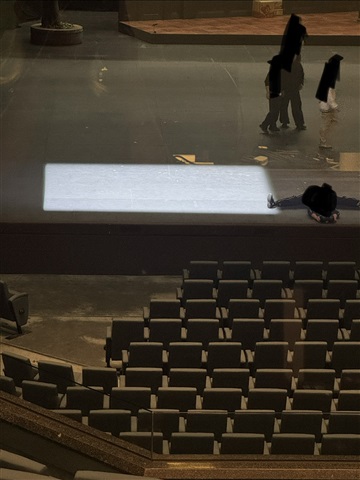
I have a question about the Halcyon Platinum. In the show, there are three rectangular paths, and each path consists of one down light and one face light. (Like picture 1) These paths have been recorded into presets and are used three times within the cue list.

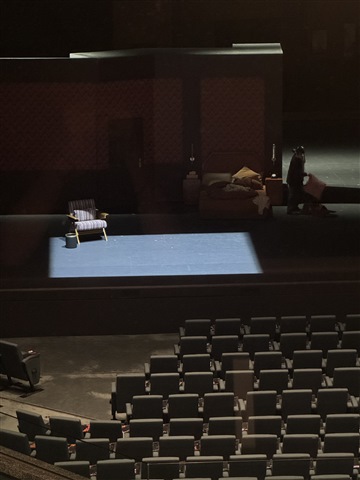
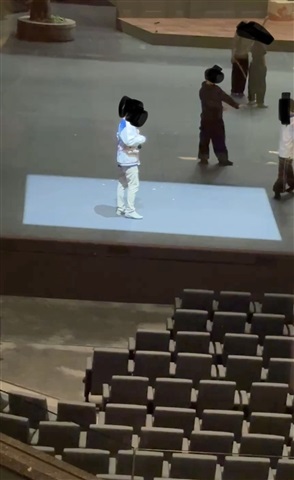
During my daily pre-show check, I’ve noticed that after I adjust the sharp focus and match the shutter angles consistently, they look correct the first one or two times I check them. However, when I go to the next cue that uses the same preset, the focus or shutter position may become slightly different, ending up like in picture 2 and 3.

Since the shutter movement opens from stage right to stage left, and closes from stage right to stage left as well, the focus must be aligned in the stage left / stage right direction, not downstage / upstage.

Is there any way to resolve this?

Thank you so much!


Parents
  • It is very hard for moving lights to do this kind of thing. There is a lot of Hysterisis and backlash and many other things. These can cause even a micrometer of tolerance, which, when amplified, can seem huge on the other side of a throw.

    With that said, there are a few things you can do to improve it.

    First, and most importantly, make sure the light always enters the look from the same direction. Playing it back on a cue list will be best for this, but also remember that when you are programming the shutters and focus, you want them to move into the position from the same direction. This helps to minimize the belt tolerance and motor hysteresis.

    Next, every time you power the fixture off and back on it introduces new factors, so minimize them by checking your position and look after you power the fixture on, and then do what you can to not recycle power until you have to. A "soft reset" from the calibration usually doesn't introduce as many potential tolerances as a full power reset.

    Lastly, it may help to experiment with movement speeds, as a slower movement with less acceleration and deceleration has been known by some people to be more repeatable.

    One extra point: while I do not pretend to know your design aesthetic, I do know that many people prefer to use the framing shutters combined with the light frost. The light frost gives just a very faint diffusion to the edge but, more importantly, makes all the framing shutters look equally "diffused," improving uniformity. This may still look great on the floor while also simplifying the tolerance topics I highlighted above.

Reply
  • It is very hard for moving lights to do this kind of thing. There is a lot of Hysterisis and backlash and many other things. These can cause even a micrometer of tolerance, which, when amplified, can seem huge on the other side of a throw.

    With that said, there are a few things you can do to improve it.

    First, and most importantly, make sure the light always enters the look from the same direction. Playing it back on a cue list will be best for this, but also remember that when you are programming the shutters and focus, you want them to move into the position from the same direction. This helps to minimize the belt tolerance and motor hysteresis.

    Next, every time you power the fixture off and back on it introduces new factors, so minimize them by checking your position and look after you power the fixture on, and then do what you can to not recycle power until you have to. A "soft reset" from the calibration usually doesn't introduce as many potential tolerances as a full power reset.

    Lastly, it may help to experiment with movement speeds, as a slower movement with less acceleration and deceleration has been known by some people to be more repeatable.

    One extra point: while I do not pretend to know your design aesthetic, I do know that many people prefer to use the framing shutters combined with the light frost. The light frost gives just a very faint diffusion to the edge but, more importantly, makes all the framing shutters look equally "diffused," improving uniformity. This may still look great on the floor while also simplifying the tolerance topics I highlighted above.

Children
No Data
Related